








Netflix
定額で見放題

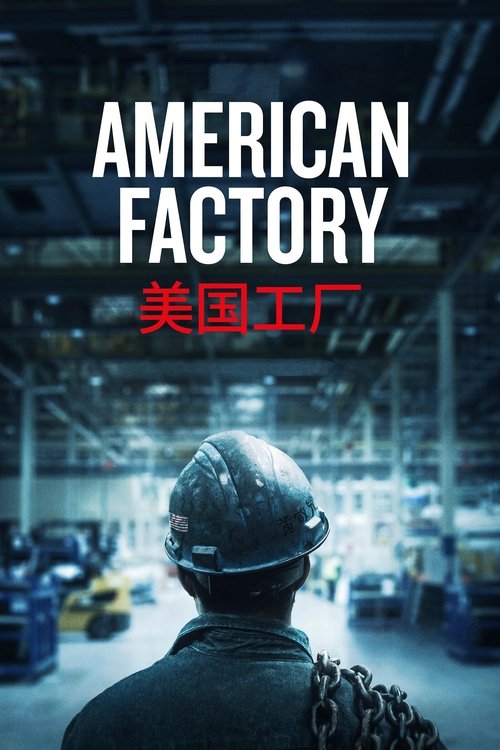
American Factory
オハイオ州で閉鎖されていた工場が中国企業により再開され、地域の期待が高まったのも束の間。米中文化の衝突により、再びアメリカンドリームが打ち砕かれる。
WHERE TO WATCH
※ 配信状況や料金は変更される場合があります。リンク先で最新情報をご確認ください。
YOUR REACTION
ゾクログユーザーのリアクション
OFFICIAL TRAILER
動画提供: YouTube / American Factory | Official Trailer | Netflix
オハイオ州で閉鎖されていた工場が中国企業により再開され、地域の期待が高まったのも束の間。米中文化の衝突により、再びアメリカンドリームが打ち砕かれる。
 プロフィールを見る →
 プロフィールを見る →プロフィールを見る →プロフィールを見る →プロフィールを見る →
AUDIENCE REVIEWS
You always read about "cultural differences" as being something that must be overcome when dealing with international projects, but that language always felt so abstract to me; if anything, it seemed like more of an excuse as to why things might be delayed rather than a real problem. This doc did a great job of telling the story of what that concept really means in practice. _American Factory_ shows you how much friction is created due to the incongruity in cultural ideas about work ethic, personal freedoms, power, and process. I think that was the highlight of the story for me.
For me as an American, there were also feelings of frustration about having a country that doesn't have an answer for these people; their life goes from making $29 working for a US company, to making $12 for a Chinese company. The anti-labor-organizing that we see from Fuyao in the film isn't even unique to this being a China-based company; our home-grown Amazon does a pretty good job of hiring "labor relations" firms to weed out union organizing. I find myself agreeing with one of the speakers at a UAW event captured in the film: we've allowed our country to become one where the rich can exploit the poor, and it would be pretty cool to take it back.
When a Chinese glass company decides to invest in a former GM motor car factory in the USA, there is local excitement about the prospects of it employing a couple of thousand Ohians and helping to reinvigorate a state that has suffered years of steady industrial decline. Maybe unsurprisingly, though, it doesn't take long for some clashes of culture to take affect between the largely domestic workforce and their Chinese management. The minimum wage is set at $14 per hour and that isn't likely to change at any time soon; the staff aren't quite treated as cattle but their performance targets are pretty much set in stone - and woebetides anyone who falls short. What's obvious is that minimising costs is key - there are even staff employed to sift through the broken glass sorting colour from colour as some glass is more valuable for recycling. Unions are recognised - how could they not be by a company from a nation that has worker's unions at every workplace, but their voices are largely unheard as the bosses' perpetual threat of redundancies and/or closure always limits their potency. This is not a marketplace where the employee has much choice and they and their employers know it. Now on the face of it, this is quite a savage critique on the often quite arbitary treatment of these blue-collar staff but on the other hand it's an equally powerful critique of the attitudes and expectations of workers in the west who have become used to working practices that are expensive and increasingly outmoded. Are these practices an hangover from the GM days or just a result of a more ingrained institutionalised sense of entitlement? The products being made here, after all, are for internal consumption not for export and so are presumably being priced accordingly. Is this another indictment of a consumer economy that wants to pay as little as possible for as much as it can get? Sadly for me, those comparisons aren't really very well made and for a film that is just shy of two hours long that absence of context rather turns this into an overly simplistic evaluations of differing business practices. Are the new owners any different from the previous ones with regard to their demands of the workforce? We don't know - indeed it isn't even addressed. Just why did the factory close in the first place? To expensive to run? The products are too expensive for the market? The quality wasn't as good as that of imported cars? We don't really address any of those issues and so are really only left with something that derides the low hanging fruit of the communist approach to enterprise without really balancing that with the undoubted benefits of more rigourous training and management for both staff and business alike. What is does do is illustrate quite clearly the ineffectiveness of the legislation that ought to protect the workers from exploitation. That their wages don't increase - even by inflation - year on year spotlights effectively how the upper hand is so clearly held by employers who see no imperative in raising their cost base unneccessarily, but again there are no contributions from legislators on how this might be tackled. This documentary has got a point to make, but after about half an hour it has made that and thereafter really goes round in ever decreasing circles that establish, criticise and/or reinforce stereotypical ideas from both systems but that extrapolate very little new from the data and opionions it garners.
口コミはTMDBユーザーによる投稿です。ゾクログの見解を示すものではありません。
RECOMMENDED FOR YOU
RECENTLY VIEWED




みんなの一言
まだコメントはありません。最初の一言を投稿しませんか?